The story behind the book
Lawrence Kirby Lunt Jr. was born in 1925. He flew night-fighter missions in the Pacific during WWII and over the Sea of Japan during Korea. After the war, he moved to Wyoming, bought a ranch in Wheatland, and fell in love with the land. "Happy ranching," he later wrote, "was interrupted by Air Force reserve status recalling me for two years in the Korean War."
In 1956, with his Belgian wife Beatrice and her father, he purchased a 5,000-acre cattle ranch in Cuba. He watched the revolution unfold, initially backing Castro, then growing horrified as the new regime executed hundreds. After the failed Bay of Pigs, the CIA recruited him — his ranch was officially Belgian, and Castro still courted Europe.
For years, Lunt ran a spy network: recruited informants, photographed Soviet missile sites, coordinated airdrops of arms and medicines. In May 1965, as he tried to fly out for his parents' 50th anniversary, Castro's secret police arrested him. Sentenced to 30 years, he endured 14 years of brutal conditions — sleep deprivation, starvation rations, a bayonet to the ribs.
His family never gave up. His brother Dr. John Lunt, a Saratoga rancher and physician, lobbied Washington for a decade. In 1979, President Carter's administration brokered a swap: four Americans for four Puerto Rican prisoners. Wyoming Governor Ed Herschler and John Lunt flew to Cuba to bring him home.
Years later, Rep. Dick Cheney sponsored legislation compensating Lunt for his time in captivity.
— Lawrence Lunt, upon release, New York Times, Sept. 19, 1979
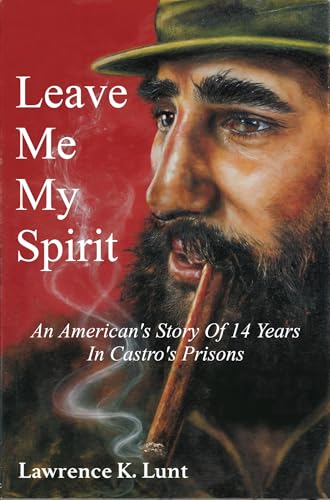
Back in America, Lunt spent ten years writing. The result was Leave Me My Spirit — a book reviewed by the New York Times, praised by Library Journal, and beloved by readers. He died in 2017 at 92, having spent his last years between Tucson, Belgium, and his brother's Highline Ranch in Saratoga, Wyoming — horseback riding on the grasslands of the West, his "happy place."